Introduction of Alphabet
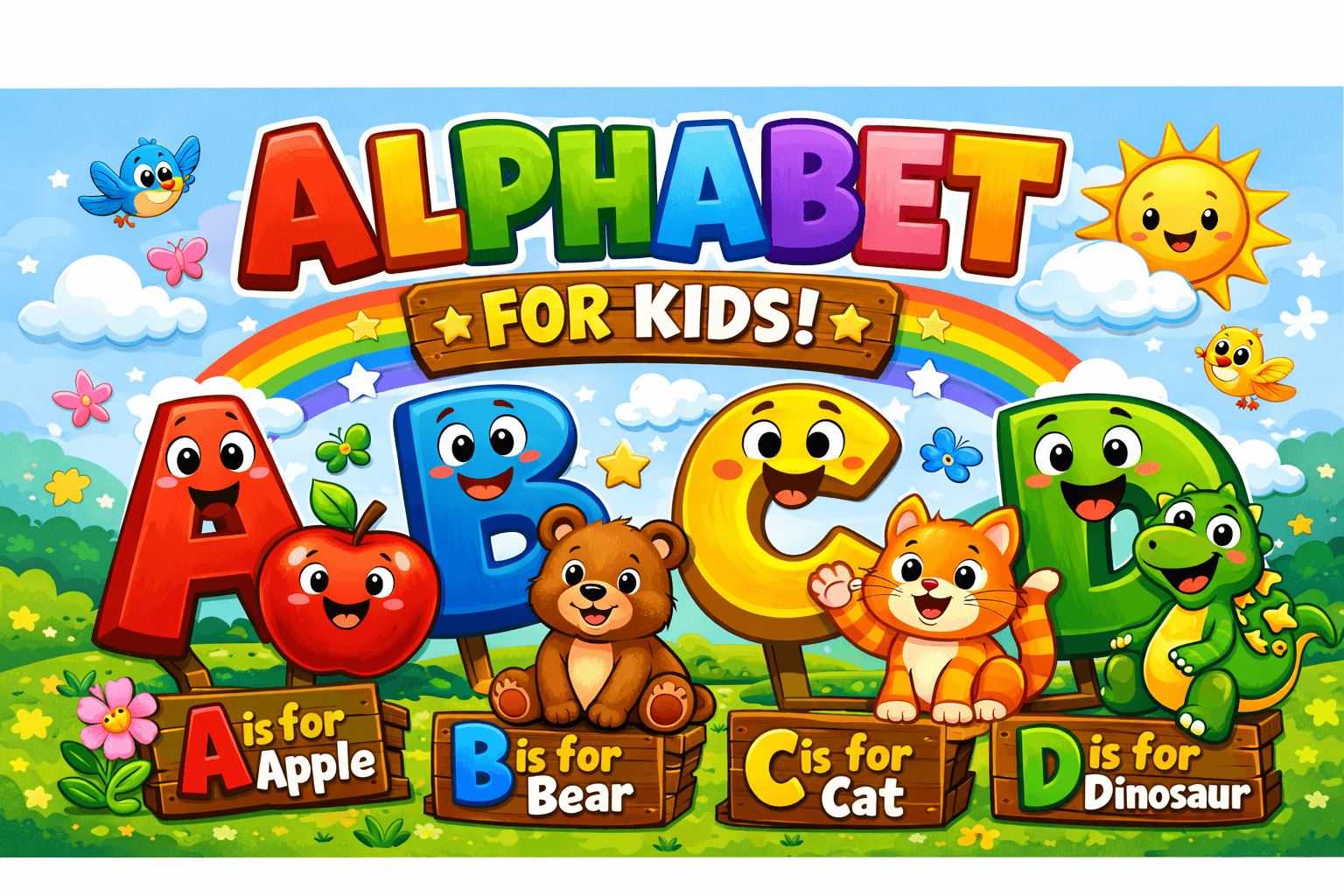
Is a standardized set of letters or characters used to represent the basic sounds of a spoken language. Each character typically corresponds to a specific sound (a phoneme), allowing words to be written down and read back phonetically.
Loading cards...
THE JOY OF LEARNING
Learning the alphabet is not just about academics; it's about the joy of discovery. Watching a child recognize a letter for the first time or sound out a word brings immense satisfaction. It's a journey filled with excitement, curiosity, and achievement. For example, seeing a child's face light up when they read their first word is a priceless moment.
THE ENGLISH ALPHABET HAS 26 LETTERS
Big letters/ Uppercase
A, B, C, D, E, F, G, H, I, J, K, L, M, N, O, P, Q, R, S, T, U, V, W, X, Y, Z
Small letters/Lowercase
a, b, c, d, e, f, g, h, I, j, k, l, m, n, o, p, q, r, s, t, u, v, w, x, y, z
Both big and small
Aa, Bb, Cc, Dd, Ee, Ff, Gg, Hh, Ii, Jj, Kk, Ll, Mm, Nn, Oo, Pp, Qq, Rr, Ss, Tt, Uu, Vv, Ww, Xx, Yy, Zz
VOWELS
Vowels are letters in the alphabet that represent open sounds in words. They are:
👉 A – ah (like in apple) 🍎
👉 E – eh (like in egg) 🥚
👉 I – ih (like in igloo) 🧊
👉 O – oh (like in orange) 🍊
👉 U – uh (like in umbrella) ☂️
Vowels help form syllables and make words pronounceable. Without vowels, words would be very hard to read or say.
CONSONANTS
Consonants are the letters in the alphabet that are not vowels. They represent sounds made with some closure or restriction of airflow in the mouth.
Examples of consonants:
👉 B – bee
👉 C – see
👉 D – dee
👉 F – ef
👉 G – jee
👉 H – aych
👉 J – jay
👉 K – kay
👉 L – el
👉 M – em
👉 N – en
👉 P – pee
👉 Q – cue
👉 R – ar
👉 S – ess
👉 T – tee
👉 V – vee
👉 W – double you
👉 X – ex
👉 Y – why
👉 Z – zee (or zed in British English)
Consonants and vowels work together to form words and sentences.
Words
A single distinct meaningful element of speech or writing, used with others (or sometimes alone) to form a sentence and typically shown with a space on either side when written or printed. Words help us communicate and understand each other. They are the building blocks of sentences.
References
- https://www.98thpercentile.com/blog/alphabet-and-phonics-for-kids/
- https://www.britannica.com/topic/alphabet-writing