Story Sequencing for Kids
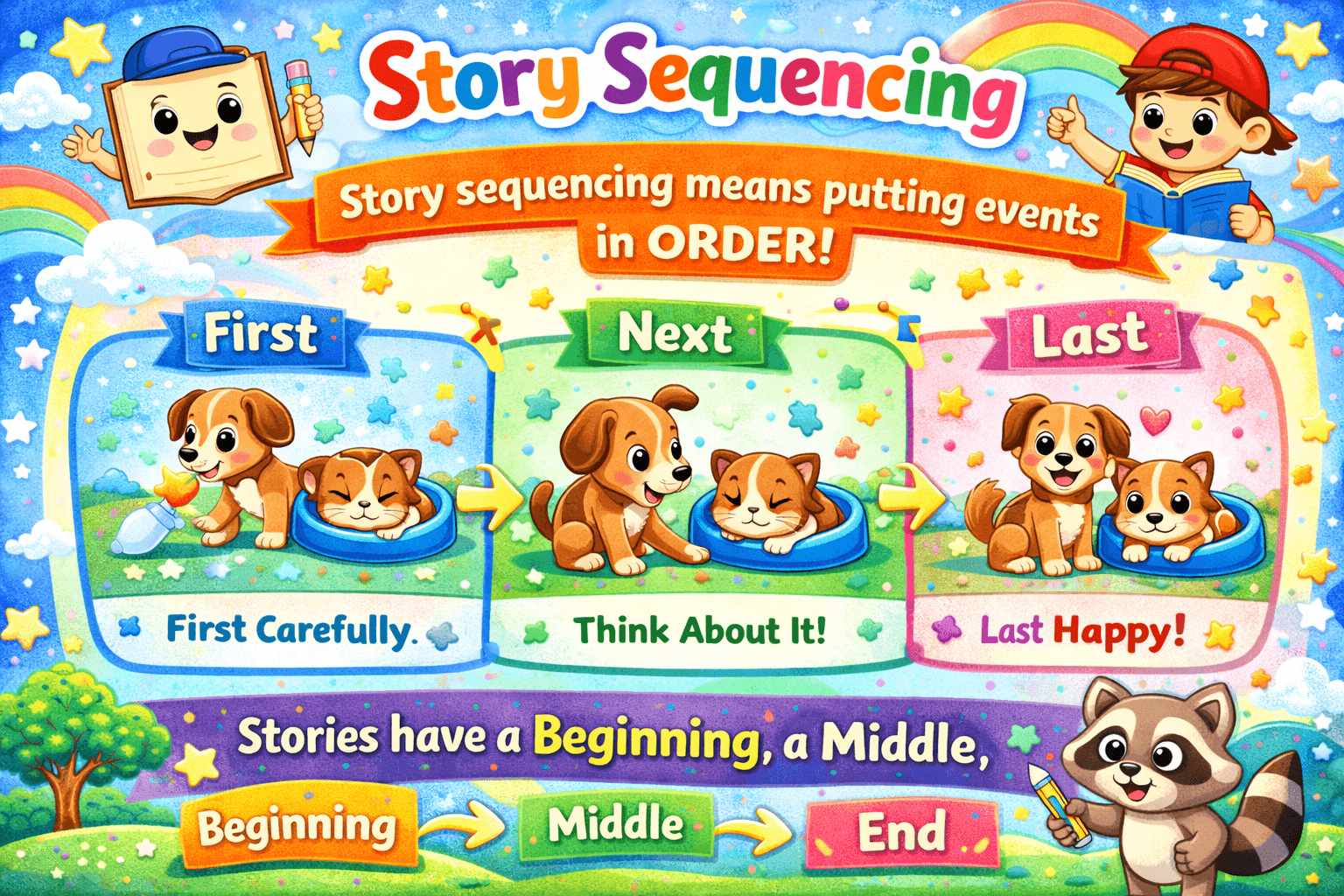
📖✨Learning to Put Stories in Order Story sequencing is the skill of putting events in the correct order. It helps children understand how a story begins, what happens in the middle, and how it ends. When kids learn sequencing, they improve their reading comprehension, memory, and storytelling skills. Story sequencing is often taught using signal words such as first, next, then, and last. These words help readers follow the flow of events in a story. Educators and literacy experts from organizations like Reading Rockets and Scholastic emphasize that sequencing helps children better understand stories and retell them clearly.
Loading cards...
🌟 Parts of Story Sequencing
1. Beginning
The beginning introduces the characters and setting.
Example:
First, Mia packed her bag for school.
Explanation:
This sentence starts the story and tells what happens first.
2. Middle
The middle tells what happens next and shows the main events.
Example:
Next, Mia met her friends and played during recess.
Explanation:
This part tells what happens after the story begins.
3. End
The end shows how the story finishes.
Example:
Finally, Mia went home and told her family about her day.
Explanation:
This sentence ends the story and tells what happened last.
🎮 Interactive Activity 1: Put the Story in Order
Read the sentences and arrange them in the correct order.
1. ___ The puppy ran after the ball.
2. ___ Tom threw the ball across the yard.
3. ___ The puppy brought the ball back to Tom.
Answer:
1. First: Tom threw the ball across the yard.
2. Next: The puppy ran after the ball.
3. Last: The puppy brought the ball back to Tom.
🎮 Interactive Activity 2: Fill in the Sequence Word
Choose the correct word: First, Next, Then, Last
Story:
_____ Anna planted a flower seed.
_____ She watered the soil every day.
_____ A small plant started to grow.
_____ The flower bloomed beautifully.
Possible Answers:
First – Next – Then – Last
🎮 Interactive Activity 3: Picture the Story
Imagine these events:
A boy cracks an egg into a bowl.
The boy eats pancakes.
The boy mixes the batter.
The boy cooks pancakes in a pan.
Can you put them in the correct order?
Correct sequence:
1. First – The boy cracks an egg into a bowl.
2. Next – The boy mixes the batter.
3. Then – The boy cooks pancakes in a pan.
4. Last – The boy eats pancakes.
✨More Example
Example 1:
First, Marco packed his backpack for the trip. Next, he rode the bus with his classmates. Then, they explored the museum and learned many new things. Finally, Marco went home and shared what he learned with his family.
Explanation:
This sequence shows the events of Marco’s field trip in the correct order from beginning to end.
Example 2:
First, Ana noticed dark clouds in the sky. Next, strong winds began to blow. Then, heavy rain started to fall. Finally, the sun came out after the storm ended.
Explanation:
This sequence shows how a storm begins, happens, and ends.
Example 3:
First, Leo found a recipe for chocolate cookies. Next, he gathered the ingredients from the kitchen. Then, he baked the cookies in the oven. Finally, Leo shared the cookies with his friends.
Explanation:
This sequence explains the steps Leo followed to bake and share cookies.
Example 4:
First, the students read a story in class. Next, the teacher asked questions about the story. Then, the students discussed their answers with their classmates. Finally, they wrote a short summary of the story.
Explanation:
This sequence shows the order of activities the students did during their reading lesson.
💡 Tips for Teaching Story Sequencing
✔ Use pictures to help kids visualize the order.
✔ Ask children to retell stories in their own words.
✔ Use sequence words like first, next, then, and last.
✔ Practice with short and simple stories.
References
- Reading Rockets. (2023). Teaching Story Structure. https://www.readingrockets.org
- Scholastic. (2022). Sequencing Events in Stories for Early Readers. https://www.scholastic.com
- International Literacy Association. (2021). Developing Reading Comprehension in Early Learners.